Keisai Eisen
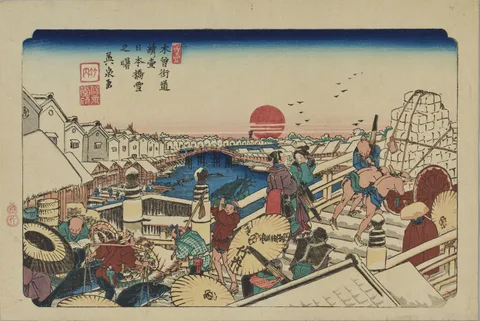
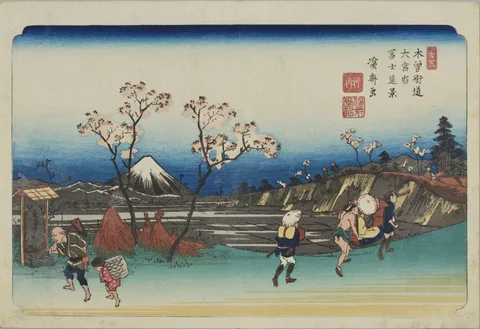
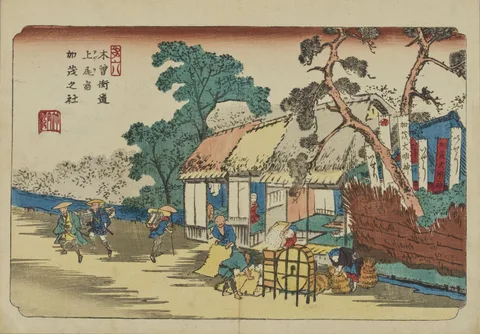
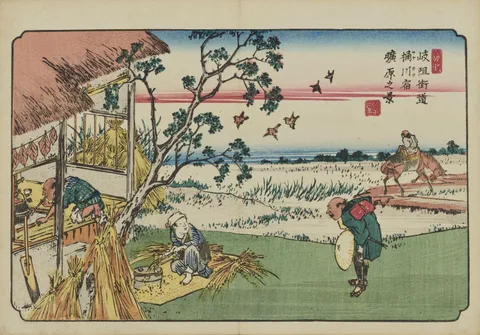
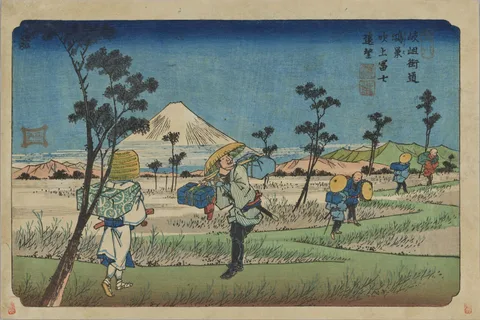
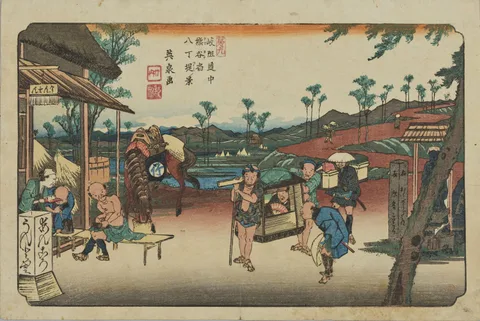
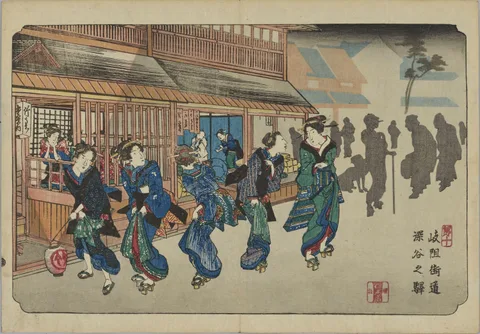
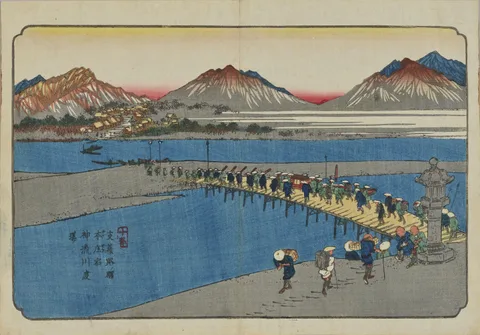
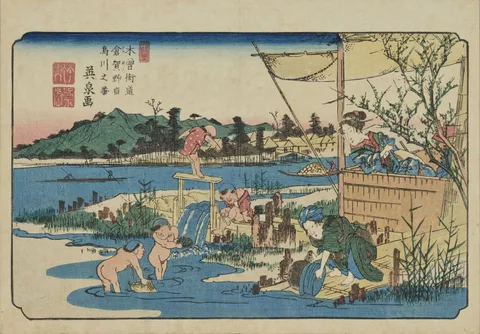
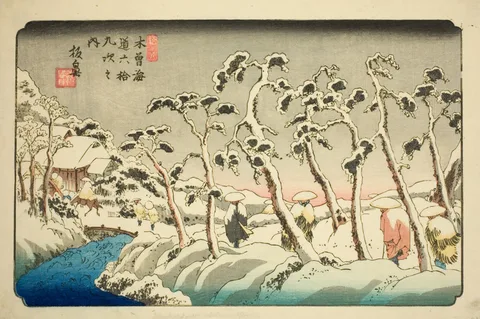
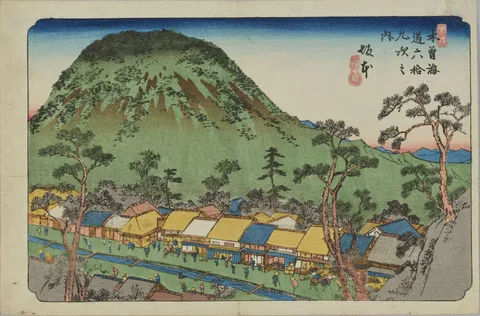
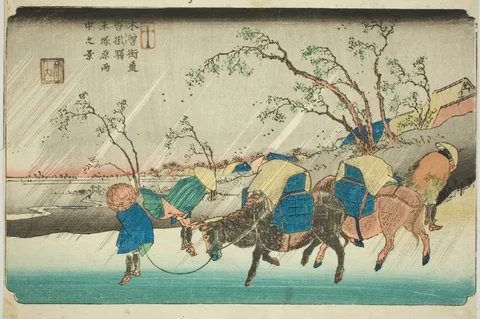
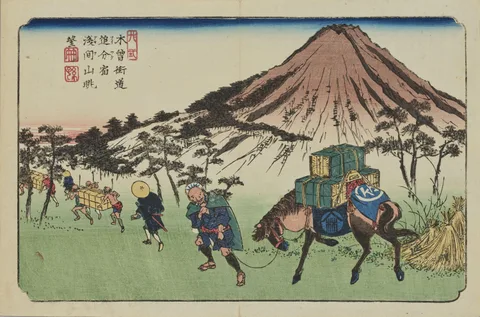
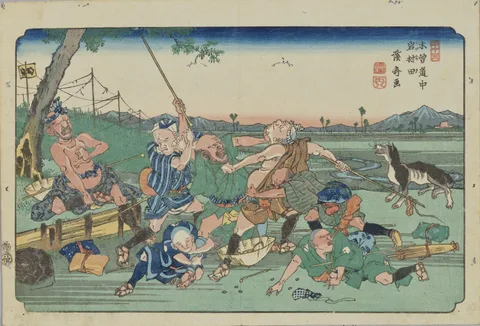
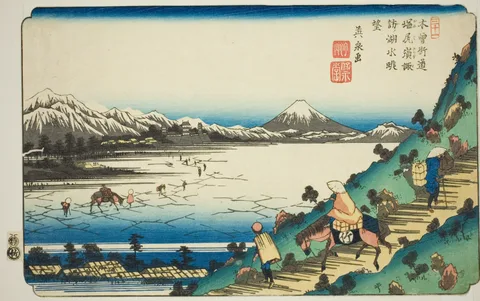
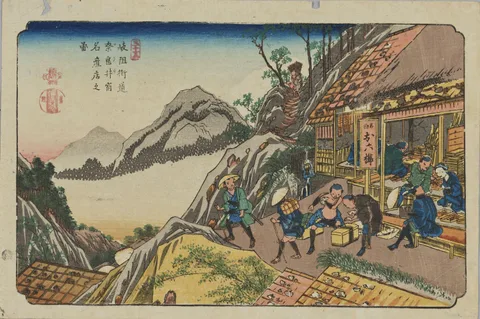
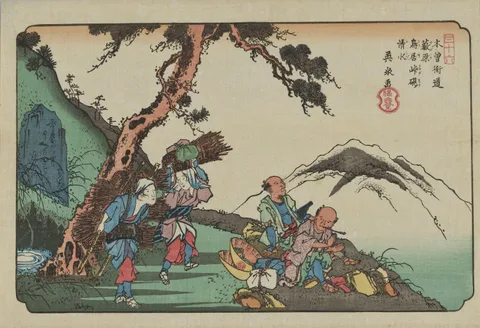
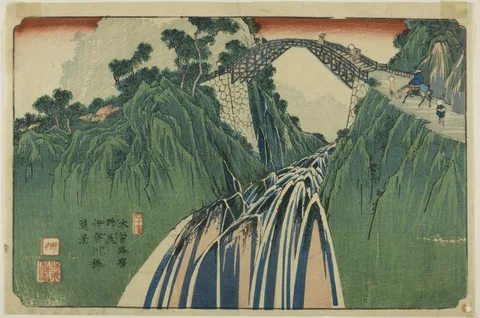
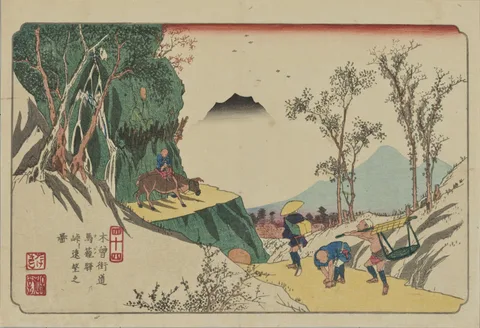
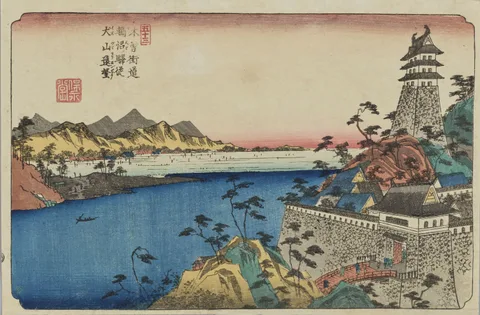
A late Edo-period ukiyo-e artist. He won popularity for his sensual, commanding portraits of beautiful women and, during the Tenpo era, devoted himself to landscape prints as well. He designed the first print of the Sixty-nine Stations of the Kisokaido, which he shared with Utagawa Hiroshige, beginning at Nihonbashi.
Keisai Eisen was born in 1791 (Kansei 3) into a low-ranking samurai family in Edo. His real name was Ikeda Yoshinobu. As a child he studied painting in the Kano school and entered service as a young man, but it did not last, and he trained under the ukiyo-e artist Kikugawa Eizan. At first he painted elegant beauties much like his teacher's, but he went on to build a style of his own, learning from Hokusai's manner as well. Eisen's beauties, with their alluring eyes and heavy, full-bodied figures, swept the market during the Bunsei era (1818-30).
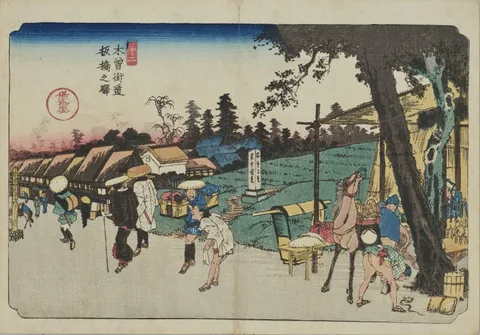
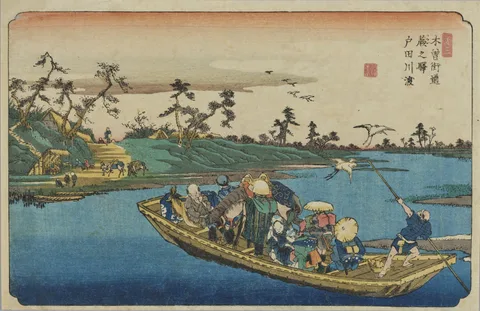
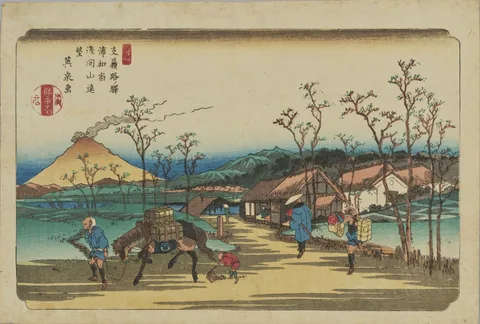
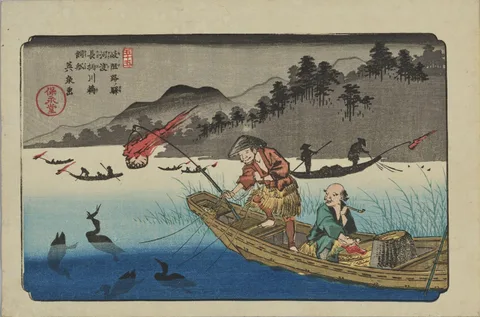
From the Tenpo era onward he produced fewer beauty prints and sought a new path in landscape. He is said to have been one of the first artists to use the imported blue pigment known as Prussian blue (bero-ai), and he won acclaim for aizuri-e, prints made in graded shades of blue alone. Around 1835 (Tenpo 6) the publisher Hoeido, who had issued the Fifty-three Stations of the Tokaido, engaged him to begin a series on the Kisokaido. He designed 24 prints, including the 11 from Nihonbashi to Honjo, before Utagawa Hiroshige took over partway through.
When the Tenpo Reforms tightened restrictions on ukiyo-e, he spent his later years writing popular fiction under the name Ipposhin'an, and he died in 1848 (Kaei 1). Eisen's beauty prints are known abroad as well: in 1887 Vincent van Gogh copied in oils an image of an oiran by Eisen that had appeared on the cover of a Paris magazine.