The Sixty-nine Stations of the Kisokaido ・ 61
Kashiwabara
木曽海道六拾九次之内 柏原
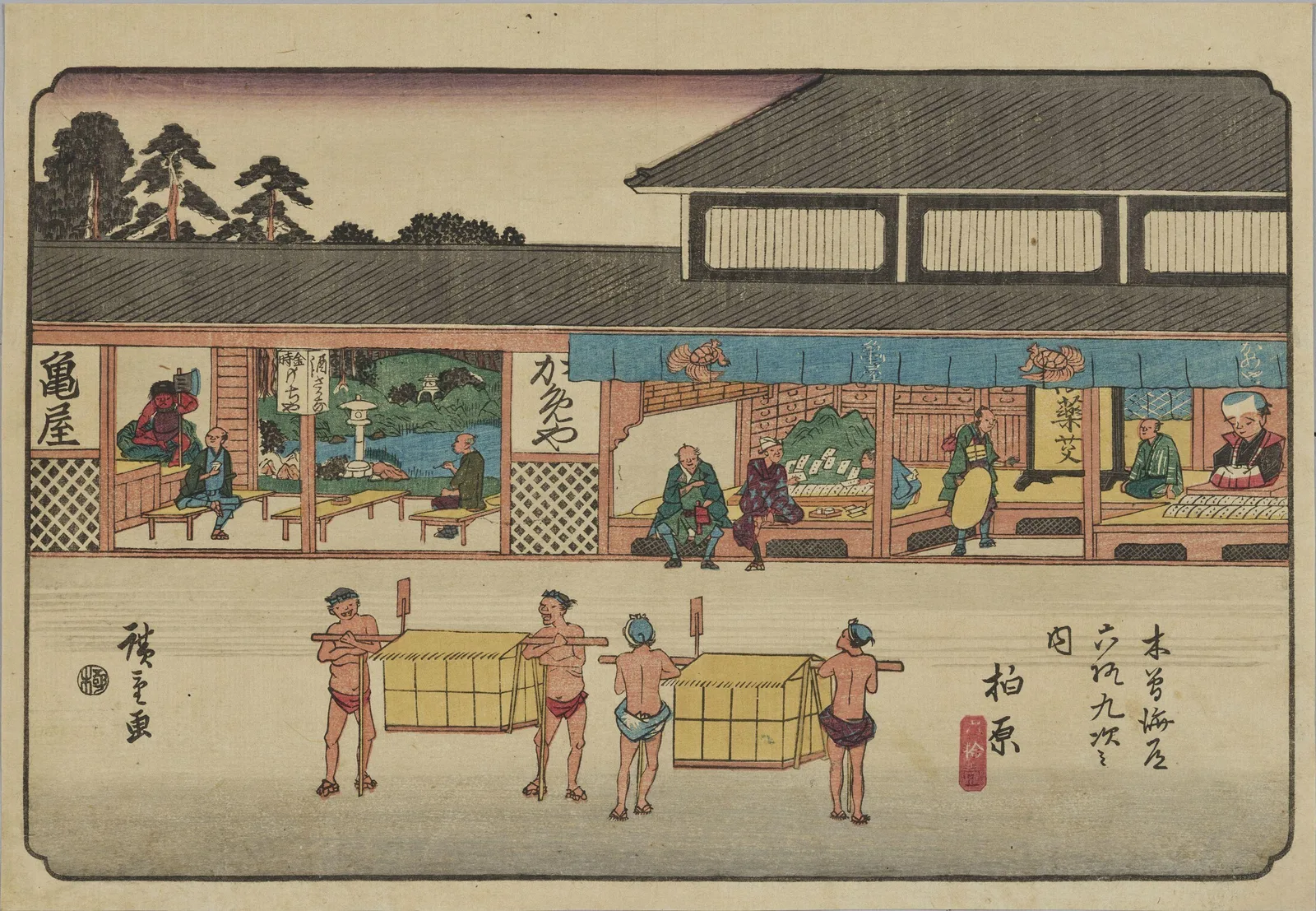
This shows the storefront of Kameya, a shop selling Ibuki moxa, the specialty of Kashiwabara-juku. Behind the broad shop a garden can be glimpsed, and two palanquins pass in front. The size of the shop conveys the bustle of a famous old establishment.
- Artist
- Utagawa Hiroshige
- Date
- c. 1835-38 (Tenpo 6-9)
- Medium / format
- Woodblock print (ukiyo-e)
- Series
- The Sixty-nine Stations of the Kisokaido 71 prints
- Place depicted
- Kashiwabara-juku(Shiga)
About this work
A large tile-roofed shop occupies the upper half of the picture. Signs reading "Kameya" in kanji and kana hang under the eaves, a doll resembling Kintaro is displayed at the left of the shop, and a garden with a stone lantern can be seen at the back. In the room on the right, a customer and a shopkeeper are talking. Along the road in front, two palanquins carried by men pass.
The long, wide shop is drawn horizontally across the full picture, divided from the white road in front, giving a top-and-bottom composition. The blue of the shop curtains and the white of the signboards line up in regular rhythm, emphasizing the size of the store. The bare bodies of the palanquin bearers add movement to the calm tones.
Kashiwabara-juku was a post town in Sakata District, Omi Province, whose famous product was moxa made from mugwort grown at the foot of Mount Ibuki. At its peak there are said to have been more than ten moxa shops, among which Kameya was known for its large shop and garden. It is said to have been popular as a souvenir for travelers on the Nakasendo.
This is a design by Hiroshige. That he drew a single shop rather than a view of the town may have been partly to advertise the local specialty. This is the first design in Omi, and from here Omi post towns continue to Otsu.
The place today
Kashiwabara-juku corresponds to today's Kashiwabara in Maibara City, Shiga Prefecture, and the Ibuki moxa shop Ibukido Kameya Sakyo Shoten, said to have been founded in the first year of Kanbun (1661), is still in business. The town has the Kashiwabara-juku History Museum, and old houses line the highway. Old temples such as Jobodai-in are also found within the town.
Where can I see it?
Exhibitions change over time. Check each museum's exhibition information before you visit.
Museums that hold this work
- Tokyo National MuseumMuseum's page for this work (opens in a new tab)
Taito City, Tokyo Accession no. A-12499-129
- National Diet LibraryMuseum's page for this work (opens in a new tab)
Chiyoda City, Tokyo Accession no. 寄別2-2-1-5
Included in Kisokaido Rokujukyu-tsugi
Museums abroad
Frequently asked questions
- Who painted The Sixty-nine Stations of the Kisokaido: Kashiwabara, and when?
- The Sixty-nine Stations of the Kisokaido: Kashiwabara is by Utagawa Hiroshige, made in c. 1835-38 (Tenpo 6-9). Medium: Woodblock print (ukiyo-e).
- What place does The Sixty-nine Stations of the Kisokaido: Kashiwabara show?
- It shows Kashiwabara-juku (Shiga).
- Where can I see The Sixty-nine Stations of the Kisokaido: Kashiwabara?
- It is held by Tokyo National Museum, National Diet Library. Exhibitions change, so check each museum's information before you visit.
Sources and references
- ColBase(東京国立博物館): 木曽海道六拾九次之内 柏原 (opens in a new tab) (checked 2026-10-19)
- 国立国会図書館デジタルコレクション: 六拾壱 木曽海道六拾九次之内柏原 (opens in a new tab) (checked 2026-10-19)
- Wikipedia: 木曽海道六十九次 (opens in a new tab) (checked 2026-10-19)
You may also like
More from Shiga
Discover more of the same region on our sister sites.
Matsuri Biyori
Festivals in Shiga
- Nagahama Hikiyama Festival Float Event
- Otsu Festival Hikiyama Float Event
- Omi Konan no San'yare Odori
- Omi no Kenketo Matsuri Naginata Furi