Hon'ami Koetsu · 1558–1637
Hon'ami Koetsu
Hon'ami Koetsu was an early Edo-period connoisseur-artist of Kyoto active in calligraphy, ceramics, lacquer, and the tea ceremony. Counted among the "Three Brushes of the Kan'ei era," he is also known for founding an artists' village at Takagamine in Kyoto.
Hon'ami Koetsu was born in Kyoto in 1558 and died in 1637. He was an early Edo-period connoisseur-artist (sukisha). His common name was Jirosaburo, and his art names included Tokuyusai, Jitokusai, and Taikoan. His family's business was appraising, polishing, and cleaning swords.
Koetsu left his name not through the family business but through his activities as a sukisha engaged in calligraphy, ceramics, lacquerwork, Noh, and the tea ceremony. In calligraphy he is counted among the "Three Brushes of the Kan'ei era," and his calligraphy style is revered as the origin of the Koetsu school. In lacquerwork, innovative designs using materials such as luminous turban shell are called "Koetsu maki-e."
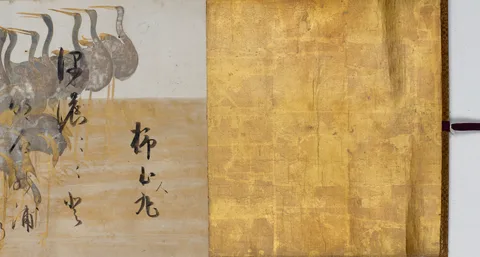
In 1615 he received land at Takagamine in northern Kyoto from Tokugawa Ieyasu and moved there, leading fellow Nichiren followers, including the Hon'ami clan, townspeople, and artisans, and founded an artists' village (Koetsu-mura). "Thirty-Six Immortal Poets Poem Scroll with Cranes Underpainting" is a handscroll written by Koetsu with underpainting by Tawaraya Sotatsu, and is designated an Important Cultural Property.