Sesshu Toyo
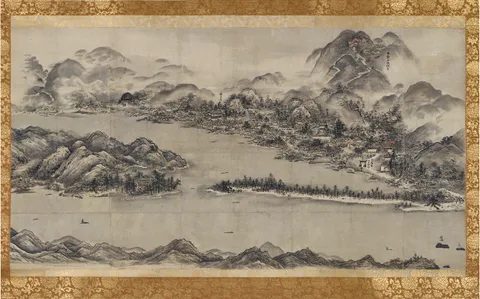
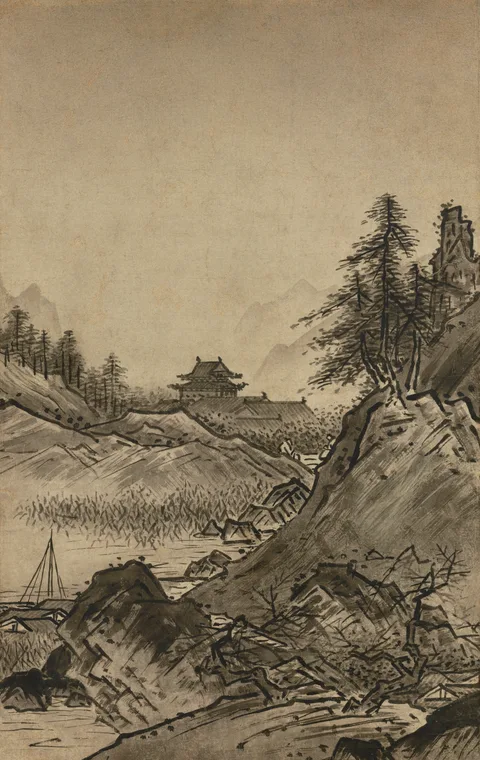
A Zen monk and ink painter of the Muromachi period. He crossed to Ming China, learned painting methods at their source, and painted the landscapes of Japan with a forceful brush. Many of his works are designated National Treasures, including "Autumn and Winter Landscapes" and "View of Amanohashidate."
Sesshu Toyo was born in 1420 (Oei 27) in Bitchu Province (now Okayama Prefecture). As a child he entered a local temple, and he is said to have trained in Zen at Shokokuji in Kyoto while studying painting under the painter-monk Shubun. Around his forties he moved to the Ouchi family, the shugo daimyo of Suo (now Yamaguchi Prefecture), and based himself in Yamaguchi. His studio there was called Unkoku-an.
In 1467 (Onin 1) he crossed to Ming China on a tribute ship, traveled for about two years, and learned directly from China's nature and painting methods. After returning, he established a distinctive ink painting that builds the forms of rocks and trees clearly with thick lines and strong gradations of ink. "Autumn and Winter Landscapes" at the Tokyo National Museum shows autumn and winter scenes in two hanging scrolls, and in the winter scene especially the sharp line that seems to split the picture vertically catches the eye.
Sesshu traveled widely and also painted real landscapes of Japan. "View of Amanohashidate" at the Kyoto National Museum is a work that renders Amanohashidate and the surrounding temples, shrines, and villages in fine detail from a viewpoint looking down from above. The "Landscapes of the Four Seasons" handscroll (Long Scroll of Landscapes), held by the Mori Museum in Yamaguchi Prefecture, is also a National Treasure. In his last years he is said to have visited Masuda in Iwami (now Shimane Prefecture), and he died when over 80. "Huike Cutting Off His Arm" (Sainenji, Aichi Prefecture) and "Splashed-ink Landscape" (Tokyo National Museum) are also National Treasures.