Scenes in and around Kyoto (Funaki Version)
洛中洛外図屏風(舟木本)
Iwasa Matabei · 17th century (Edo period) · Folding screen
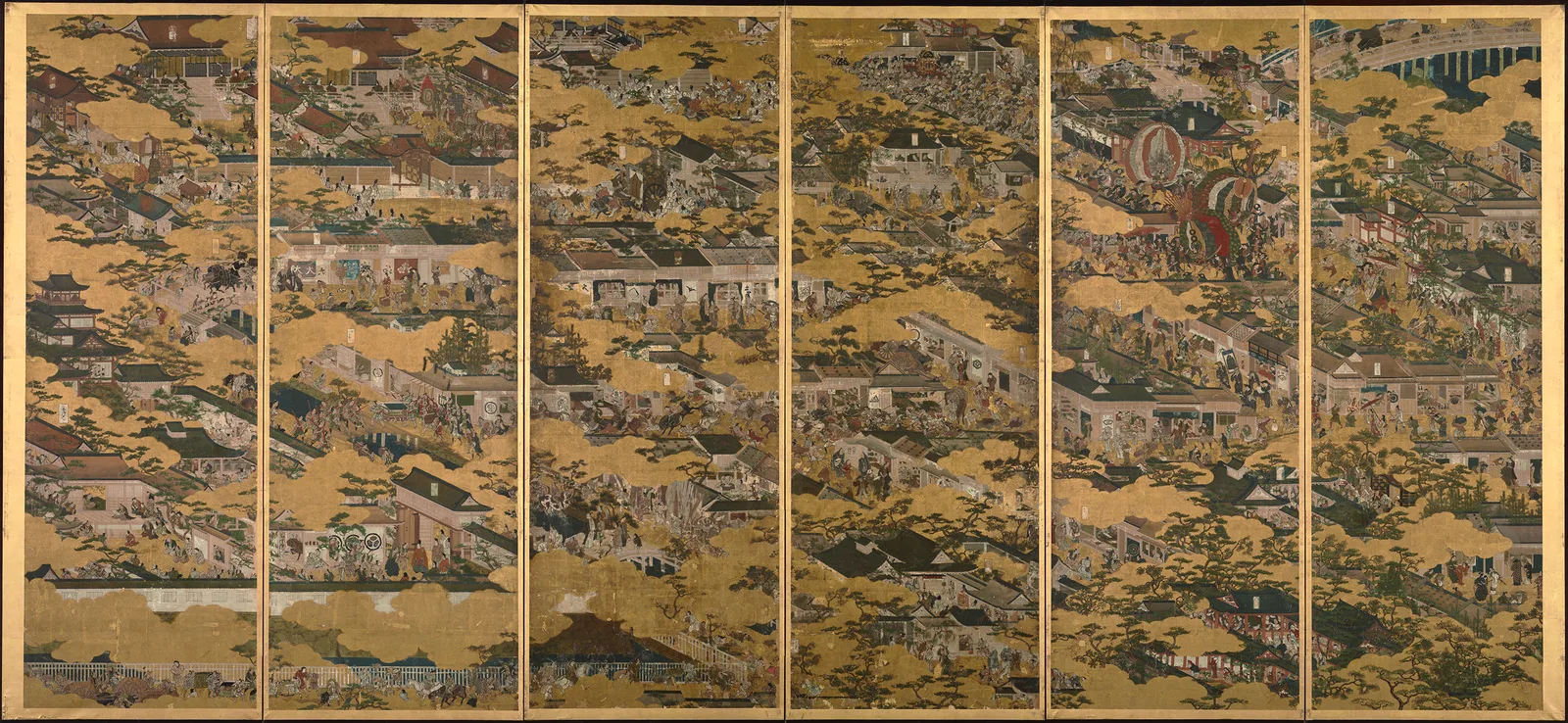
One screen of a six-panel pair. Image: Source: ColBase (Work page (opens in a new tab)) (reduced in size on this site) Public Data License 2.0 of the Government of Japan (compatible with CC BY 4.0) (opens in a new tab) View larger
The National Treasure "Scenes in and around Kyoto (Funaki Version)" by Iwasa Matabei is a pair of six-panel gold-ground folding screens from the 17th century (Edo period) that fill the view of central Kyoto from the south with people. It is held by the Tokyo National Museum.
- Artist
- Iwasa Matabei
- Date
- 17th century (Edo period)
- Medium / format
- Folding screen
- Place depicted
- Kyoto (Rakuchu-Rakugai) (Kyoto)
About this work
This pair of six-panel folding screens packs the city of Kyoto and its people tightly onto a gold ground. It is color on paper with a gold ground, and each screen measures 162.7 x 342.4 cm. It is designated a National Treasure.
Many Rakuchu-Rakugai ("in and around Kyoto") screens come as a set: one screen shows the eastern half of the city seen from the west, and the other shows the western half seen from the east. This work instead shows only the center of Kyoto, seen from the south. A river running diagonally toward the lower right links the two screens. It is the Kamo River, which flows north to south along the east side of Kyoto; the area west of it (left) is Rakuchu, the city proper, and the area east of it (right) is Rakugai, the outskirts. At the far right stands the Great Buddha Hall of Hoko-ji Temple, built by Toyotomi Hideyoshi, and at the far left is Nijo Castle of the Tokugawa clan, so that the two face each other across the city.
The screens show about 2,500 people. On Gojo Ohashi Bridge, a group that seems to be returning from cherry blossom viewing dances with fans and cherry branches, and at the rear a drunken man is held up by his companions on both sides, while a boatman under the bridge looks up in surprise. There is also the pleasure of looking for sights and events that can still be visited today, such as Sanjusangen-do, Kiyomizu-dera, Yasaka Shrine, and the Gion Festival.
The artist, Iwasa Matabei, was a painter who worked in Kyoto, Fukui, and Edo from the Azuchi-Momoyama period into the early Edo period, and he excelled at lively depictions of people. Because the screens were handed down in the Funaki family of Shiga, they are affectionately known as the "Funaki Version."
The place today
The screens depict central Kyoto, spanning Rakuchu west of the Kamo River and Rakugai to its east. Sights and events that can still be visited today, such as Gojo Ohashi Bridge, Sanjusangen-do, Kiyomizu-dera, Yasaka Shrine, and the Gion Festival, can be found in the picture.
Where can I see it?
Exhibitions change over time. Check each museum's exhibition information before you visit.
Museums that hold this work
- Tokyo National MuseumMuseum's page for this work (opens in a new tab)
Taito City, Tokyo Accession no. A-11168
Plan your visit to Tokyo National Museum
Find places to stay, activities and rental cars for a visit to Tokyo National Museum, which holds "Scenes in and around Kyoto (Funaki Version)".
Frequently asked questions
- Who painted Scenes in and around Kyoto (Funaki Version), and when?
- Scenes in and around Kyoto (Funaki Version) is by Iwasa Matabei, made in 17th century (Edo period). Medium: Folding screen.
- What place does Scenes in and around Kyoto (Funaki Version) show?
- It shows Kyoto (Rakuchu-Rakugai) (Kyoto).
- Where can I see Scenes in and around Kyoto (Funaki Version)?
- It is held by Tokyo National Museum. Exhibitions change, so check each museum's information before you visit.
Sources and references
- ColBase (Tokyo National Museum) (in Japanese) (opens in a new tab) (checked 2026-11-05)
You may also like
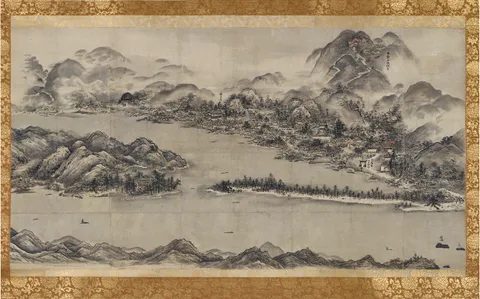
View of Amanohashidate
Sesshu Toyo · Muromachi period, 15th-16th century
Image: ColBase
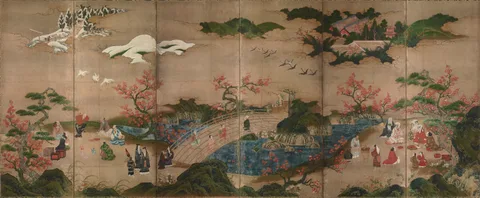
Viewing Maple Leaves
Kano Hideyori · 16th century (Muromachi to Azuchi-Momoyama period)
Image: ColBase
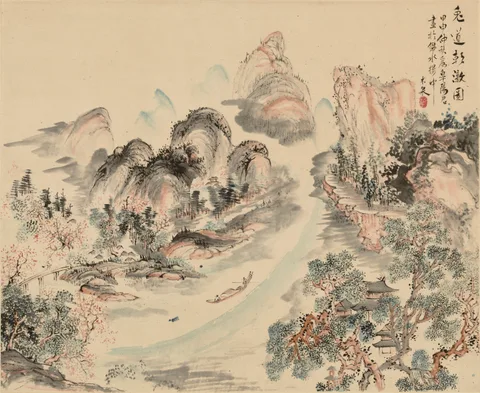
Morning View of Uji River
Aoki Mokubei · 1824 (Bunsei 7)
Image: ColBase
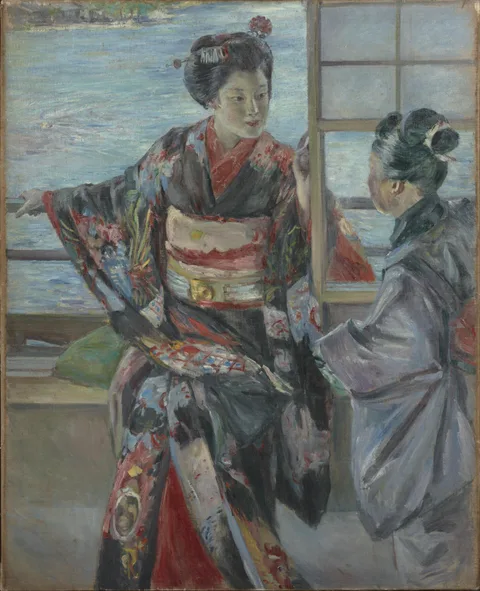
Maiko Girl
Kuroda Seiki · 1893 (Meiji 26)
Image: ColBase
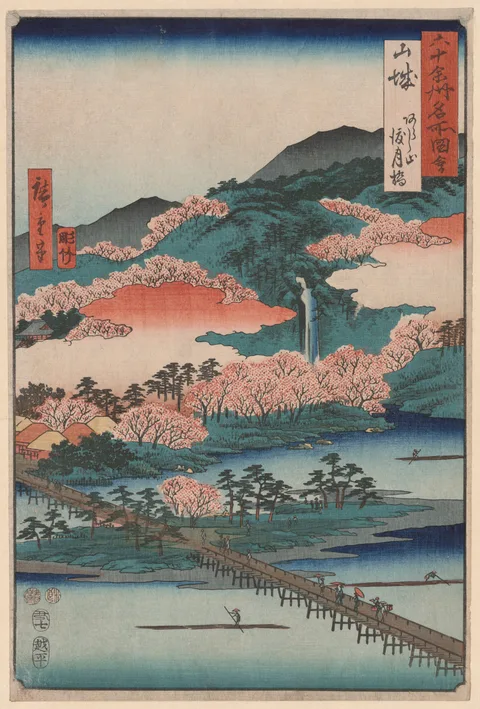
Famous Places in the Sixty-odd Provinces
Yamashiro Province: The Togetsu Bridge at Arashiyama
Utagawa Hiroshige · 1853 (Kaei 6)
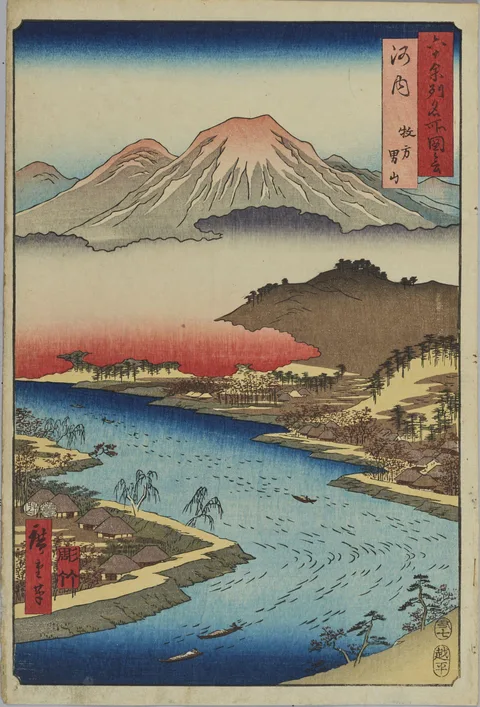
Famous Places in the Sixty-odd Provinces
Kawachi Province: Otokoyama from Hirakata
Utagawa Hiroshige · 1853 (Kaei 6)
Image: ColBase
More from Kyoto
Discover more of the same region on our sister sites.
Matsuri Biyori
Festivals in Kyoto
- Yamahoko, the float ceremony of the Kyoto Gion festival
- Kyoto no Rokusai Nenbutsu
- Yasuraibana
- Kuta no Hanagasa Odori