Takahashi Yuichi
A Western-style painter born in Edo. At the end of the Edo period he was struck by the lifelike quality of Western lithographs and resolved to paint in oils, becoming one of Japan's earliest serious Western-style painters. "Salmon" at the Tokyo University of the Arts is an Important Cultural Property.
Takahashi Yuichi was born in 1828 (Bunsei 11) at the Edo residence of the Sano domain in Shimotsuke Province (now Sano, Tochigi Prefecture), into a samurai family. His childhood name was Inonosuke, and he took the name Yuichi in the Meiji era. He first studied Kano-school painting, but in the Kaei years (1848-54) he saw Western lithographs and was strongly moved by their lifelike rendering.
In 1862 (Bunkyu 2) he entered the painting bureau of the Bansho Shirabesho, which the shogunate had established to study Western learning, and learned Western painting methods under Kawakami Togai. He also visited the English painter Wirgman in Yokohama and was taught practical oil painting. In 1873 (Meiji 6) he opened the painting school Tenkairo (later Tenkai Gakusha) in Hamacho, Nihonbashi, Tokyo, working to spread Western painting.
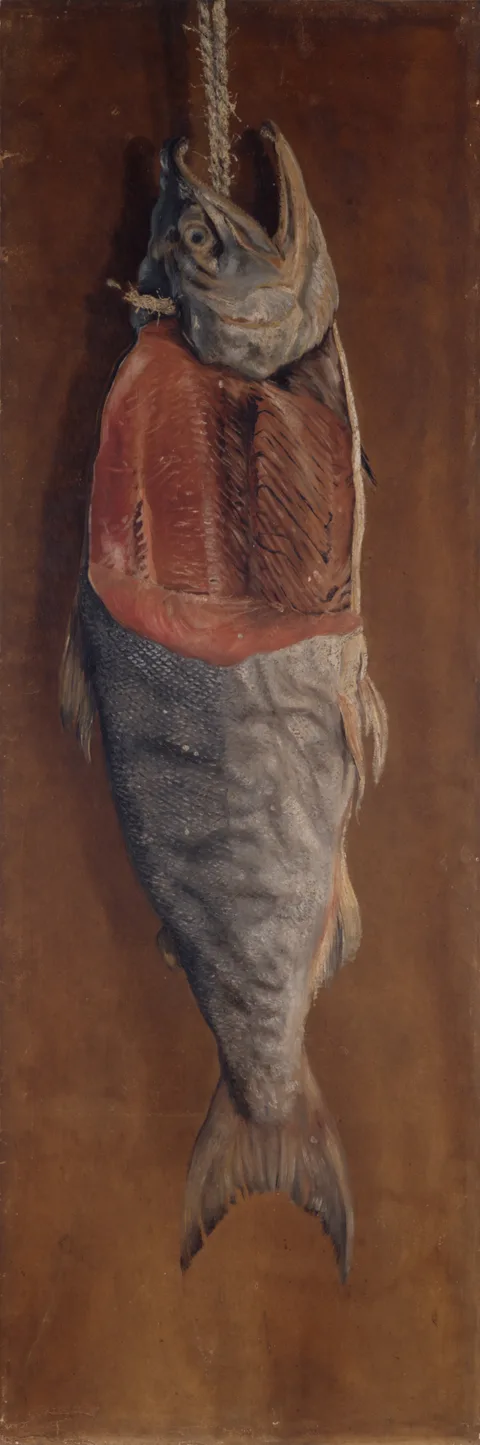
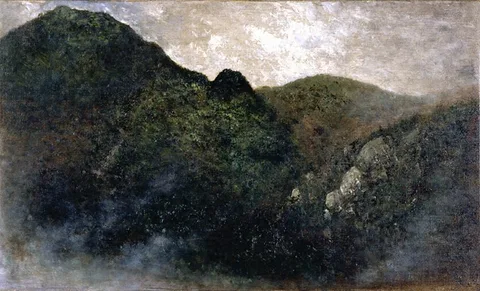
"Salmon" (around 1877, Meiji 10; The University Art Museum, Tokyo University of the Arts) is a tall, narrow picture of a salted salmon hung from a rope with half its flesh cut away. It renders even the sheen of the scales and the color of the cut flesh as if the thing were before one's eyes. In 1881 (Meiji 14) he painted a newly opened road at the request of Yamagata Prefecture, and he left many landscapes of the Tohoku region. He died in 1894 (Meiji 27). "Oiran" (The University Art Museum, Tokyo University of the Arts, Important Cultural Property), a candid painting of a courtesan, is also a major work.