Ogata Korin
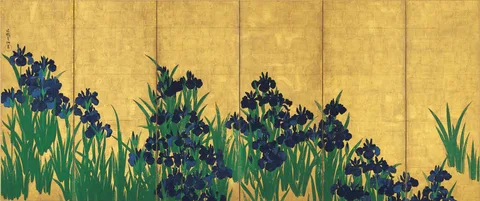
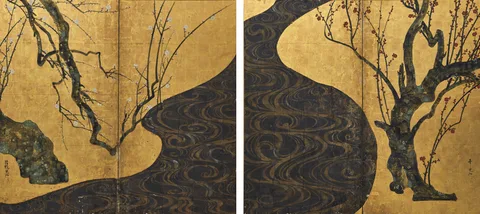
A Kyoto painter of the mid-Edo period. He studied Tawaraya Sotatsu and painted gorgeous decorative pictures that place clean forms and colors on gold grounds. "Irises" and "Red and White Plum Blossoms" screens are National Treasures.
Ogata Korin was born in 1658 (Manji 1) to the Kariganeya, a Kyoto kimono merchant. The Kariganeya was a large shop that supplied clothing to the imperial court and daimyo families, and from youth Korin was familiar with Noh, the tea ceremony, and kimono design. His younger brother was the potter Ogata Kenzan. When the family business declined and he had spent his inheritance, he turned seriously to painting from his late thirties.
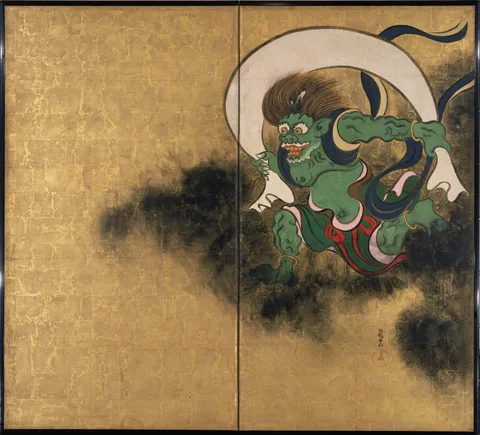
Korin deeply studied the works of Tawaraya Sotatsu, who had been active in Kyoto about 100 years earlier. "Wind God and Thunder God" screens at the Tokyo National Museum are a copy of Sotatsu's screens of the same subject. While basing it on Sotatsu's composition, he refined the outlines and sharpened the contrast of colors. For several years from around 1704 (Hoei 1) he lived in Edo and also took on work for daimyo families and others.
The Nezu Museum's "Irises" screens depict a cluster of irises on a gold ground in just ultramarine and malachite green, repeating the same shapes like a stencil to create a light rhythm. The MOA Museum of Art's "Red and White Plum Blossoms" screens, a late work, place a stylized stream in the center with red and white plum trees on either side. The "Korin pattern," named for him, spread as a design for kimono and crafts, and since Sakai Hoitsu and others later admired Korin, the line from Sotatsu to Korin came to be called the "Rinpa" school. He died in Kyoto in 1716 (Shotoku 6).