Carlo Dolci
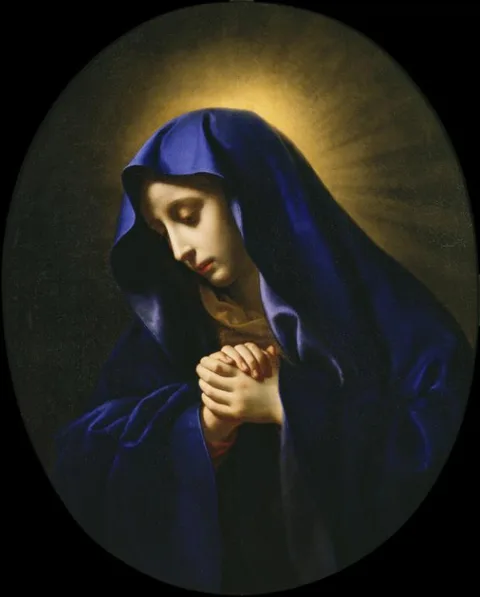
A 17th-century painter of Florence, Italy. A deeply devout man, he painstakingly painted the Virgin and saints with smooth skin and clear colors. The National Museum of Western Art holds his "Mater dolorosa."
Carlo Dolci was born in Florence in 1616 and spent nearly all his life in that city. He studied from boyhood under the painter Jacopo Vignali and was recognized early for his skill at portraits. He also received commissions from the Medici, who ruled Florence. In 1672 he was invited to Innsbruck in Austria, where he painted a portrait of an archduchess who was to marry the emperor. Many of his works remain in Florentine museums such as the Uffizi and the Palazzo Pitti.
Dolci was a painter who built up his paint so carefully that brushstrokes cannot be seen. He is also known for the long time he spent finishing a single picture. Most of his subjects are half-length figures of the Virgin and saints, objects of prayer. He made figures emerge from dark backgrounds and expressed quiet emotion through lowered eyes and clasped hands. Such pictures were favored as devotional images for private prayer at home, and many works with similar compositions survive. Until late in life he kept painting the same subjects with small variations.
The National Museum of Western Art's "Mater dolorosa" (around 1655) shows the Virgin in a vivid blue robe against a dark background, with a golden halo above her head. It is regarded as an example of a private devotional picture from an age when the Catholic Church sought pictures that would deepen faith. Dolci died in Florence in 1687.