Rooster
鶏図
Ito Jakuchu · Mid-Edo period (18th century) · Hanging scroll
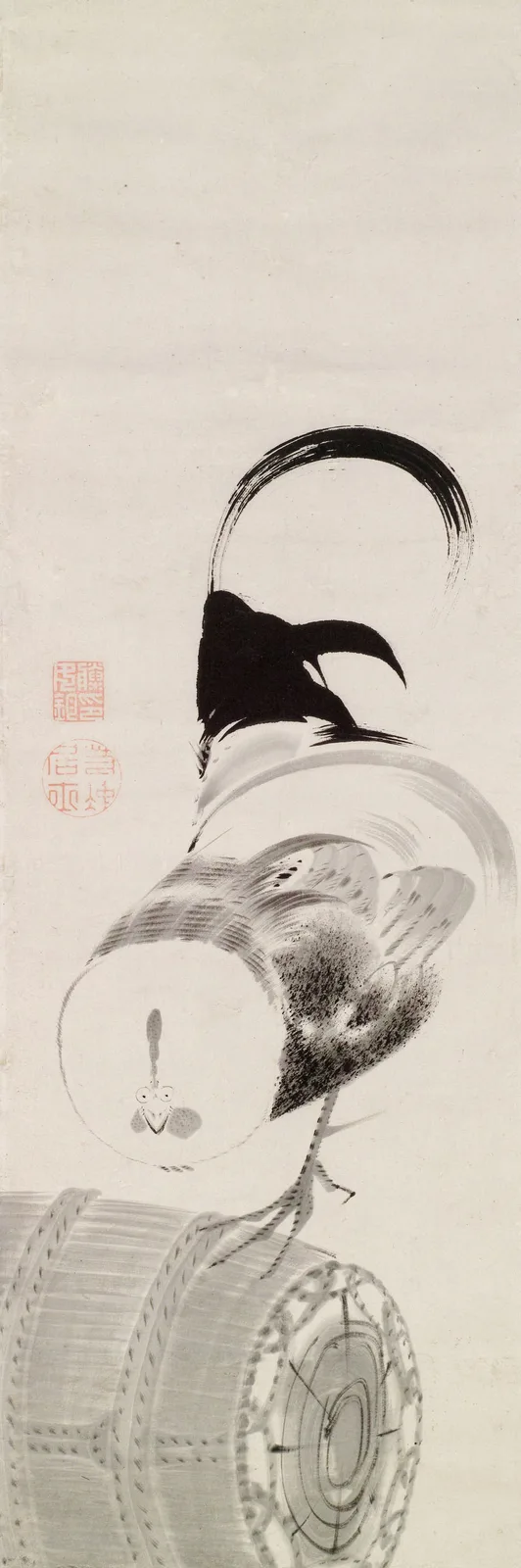
Image: Source: Tokyo Fuji Art Museum (Work page (opens in a new tab)) (reduced in size on this site) CC0 (opens in a new tab) View larger
A hanging scroll by the mid-Edo painter Ito Jakuchu, showing a rooster standing on one leg on a rice-straw bale, painted in ink. Jakuchu is known for sketching chickens he kept in his garden, and this work is held by the Tokyo Fuji Art Museum.
- Artist
- Ito Jakuchu
- Date
- Mid-Edo period (18th century)
- Medium / format
- Hanging scroll
About this work
A rice-straw bale sits at the bottom of the narrow format, and a rooster stands on it on one leg. Its body is turned nearly toward the viewer, and its long black tail arcs upward. It balances like a circus performer, with a humorous expression.
Jakuchu is known to have kept dozens of chickens in his garden and sketched them repeatedly. The museum suggests this work may capture one of them. Front-facing chickens also appear in the Imperial Collection's Doshoku sai-e, "Group of Roosters," and Saifuku-ji's "Cactus and Group of Roosters," and are said to show a more distinctive expression than chickens in profile.
At first glance the brushwork looks rough, but the straw rope on the bale and the rooster's face, feathers and legs are all carefully rendered in different densities of ink. Looking closely, you can also see fine dot patterns on the comb and wattles.
Where can I see it?
Exhibitions change over time. Check each museum's exhibition information before you visit.
Museums that hold this work
Plan your visit to Tokyo Fuji Art Museum
Find places to stay, activities and rental cars for a visit to Tokyo Fuji Art Museum, which holds "Rooster".
Frequently asked questions
- Who painted Rooster, and when?
- Rooster is by Ito Jakuchu, made in Mid-Edo period (18th century). Medium: Hanging scroll.
- Where can I see Rooster?
- It is held by Tokyo Fuji Art Museum. Exhibitions change, so check each museum's information before you visit.
Sources and references
- Tokyo Fuji Art Museum (in Japanese) (opens in a new tab) (checked 2026-11-05)
- Japan Search (in Japanese) (opens in a new tab) (checked 2026-11-05)
You may also like
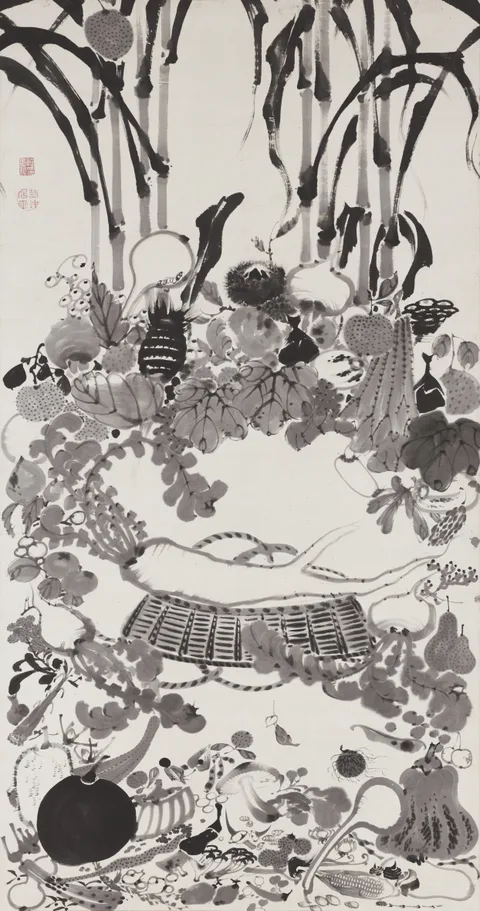
Vegetable Nirvana
Ito Jakuchu · Edo period
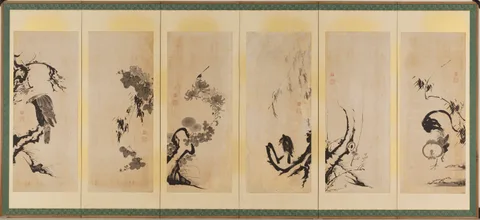
Birds and Flowers (Mounted Panel Screens)
Ito Jakuchu · Edo period (18th century)
Image: ColBase
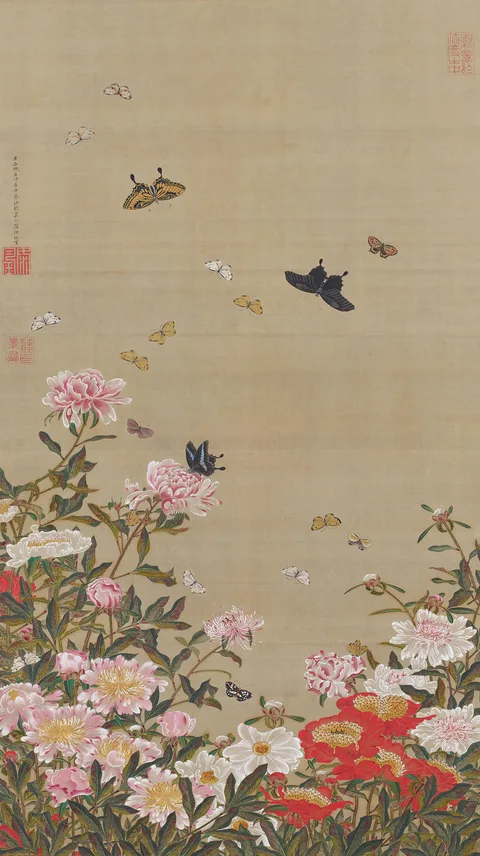
Colorful Realm of Living Beings: Peonies and Butterflies
Ito Jakuchu · c. 1757-58 (Horeki 7-8)
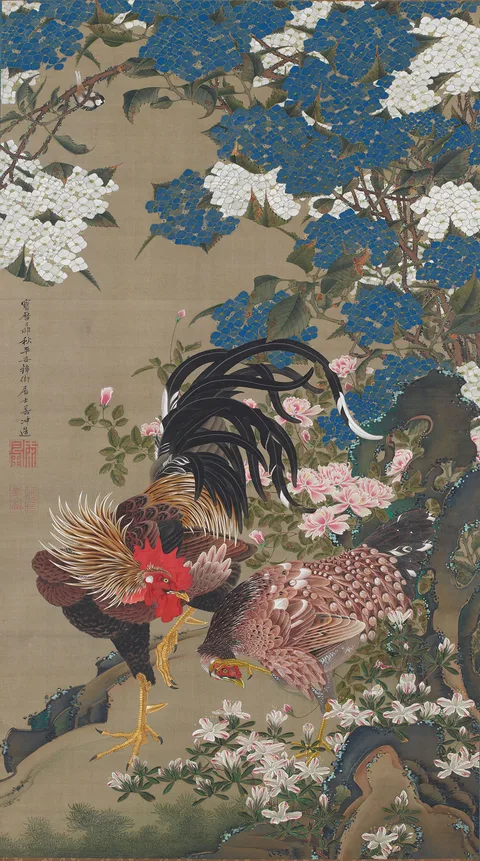
Colorful Realm of Living Beings: Rooster and Hen with Hydrangeas
Ito Jakuchu · 1759 (Horeki 9)
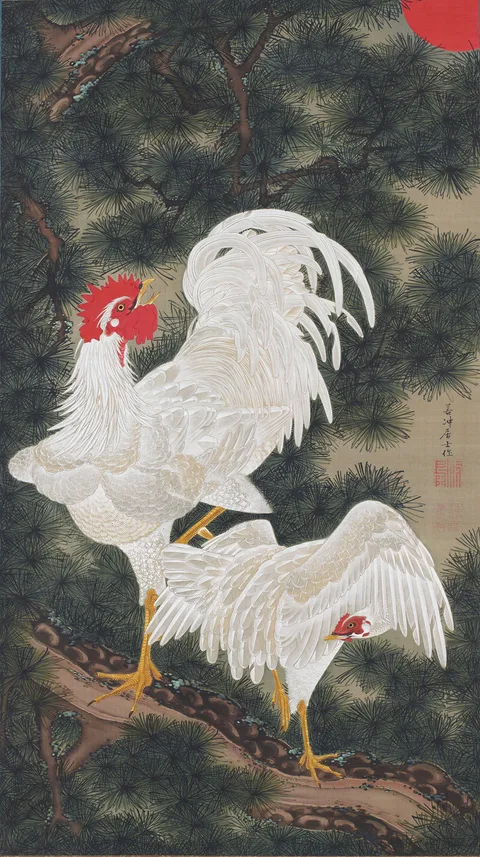
Colorful Realm of Living Beings: White Fowl and Old Pine
Ito Jakuchu · 1761 (Horeki 11) or earlier
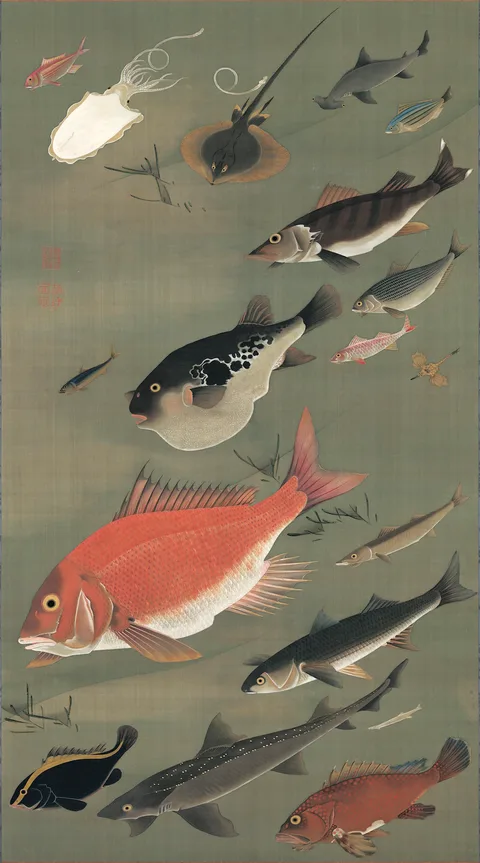
Colorful Realm of Living Beings: A School of Fish
Ito Jakuchu · c. 1766 (Meiwa 3)
More from Tokyo
Discover more of the same region on our sister sites.